→
Insights
August 2, 2026
0 min
-
Olivia Emms
Associate Software Engineer
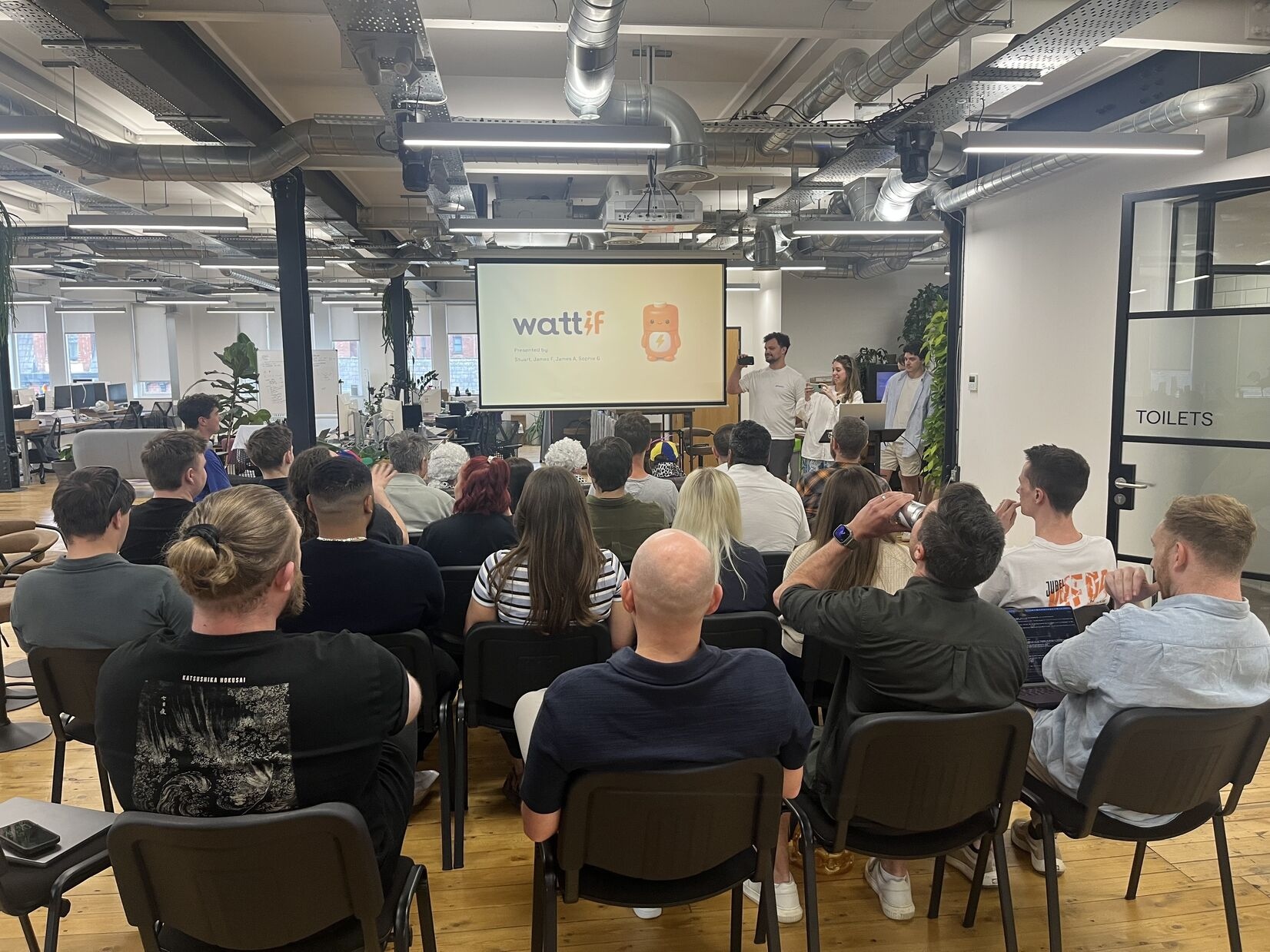
It’s time for our quarterly Hack Day where the Parallax team step away from day-to-day work to explore emerging technologies and current industry challenges such as AI energy consumption, data science, combining AI, computer vision, and IoT, our project range is limitless.
This spills into our daily work, encouraging the team to jump onto different projects and open more doors to take on a variety of work. We admire innovation and individuality, and Hack Day is the best place for us to bring that to the forefront. The aim of the day is to bring different avenues of the business together, which we believe inspires versatility and productivity. It is important to us that everyone works on a project they truly enjoy and Hack Day can open individuals up to other projects they might not have been interested in previously. It also gives us the opportunity to experiment with ideas that could shape future projects. Whether it is testing new technologies, improving internal processes, or completely new topics, Hack Day creates a space for creativity and collaboration.
Our most recent Hack Day we looked into water and energy consumption with our prompt being “Decoding energy: Turn complex energy datasets into actionable insights, explanations, predictions or decisions”. In preparation for the day, we built an internal tool that combined a web app with your AI agent in Cursor allowing teams to build prediction models without needing extensive machine learning knowledge. This way everyone at Parallax could get involved and develop predictive models for their team’s project.
The team was split into five groups all coming up with amazing solutions to hit the prompt. Scoring first place was a simulation app of your house to track energy consumption and how that may change when switching to renewable energy sources such as solar panels, all figures taken directly from your energy provider. This showed how switching to more renewable energy sources affects cost and impact, which is incredibly useful not only for businesses but for people who want to be more aware of their carbon footprint.
Another stand out project was an AI usage tracker that would estimate your energy impact of AI usage and suggest ways to offset it by planting trees, donating to environmental charities. It also included a model comparison, to show the difference in energy impact when using a less demanding model such as Sonnet compared to Opus or Fable in Claude. Routing and judging models was also something that was discussed to effectively switch between models without user interaction. As the global expansion of AI continues to grow and more data centres being built businesses are being encouraged to better understand the energy impact of the AI systems and develop alternatives that still carry the convenience of automation, so this idea was really on point for Parallax.
Every team approaches the challenges differently and sharing them at the end of the day in our Lightning Talks presentations highlighted the individuality and creativity of everyone across Parallax. Seeing the team bring ideas together and develop them into practical tools using complex datasets in under a day was a reminder that giving people the freedom to experiment often produces ideas that wouldn’t emerge during day-to-day work. Hack Day continues to show how collaboration, experimentation can lead to ideas that can influence us across both our internal work and client projects.
One thing became clear after the energy consumption-focussed Hack Day. Our conversations developed from recognising that AI has an environmental and financial cost to having solutions on how to reduce our impact.