When we joined the project, we inherited a prototype that required a redesign of the hardware into a smaller, efficient, predictable, and production-ready device. We then built the supporting cloud infrastructure for ingesting and visualising real-time data, added multiple control modes (manual, threshold-based with hysteresis buffer, scheduled mode) and created a dashboard with user friendly controls for managing automated responses to environmental change: oxygen saturation levels falling below a threshold automatically switch on an oxygenator, plus an SMS and email notification system can be triggered.
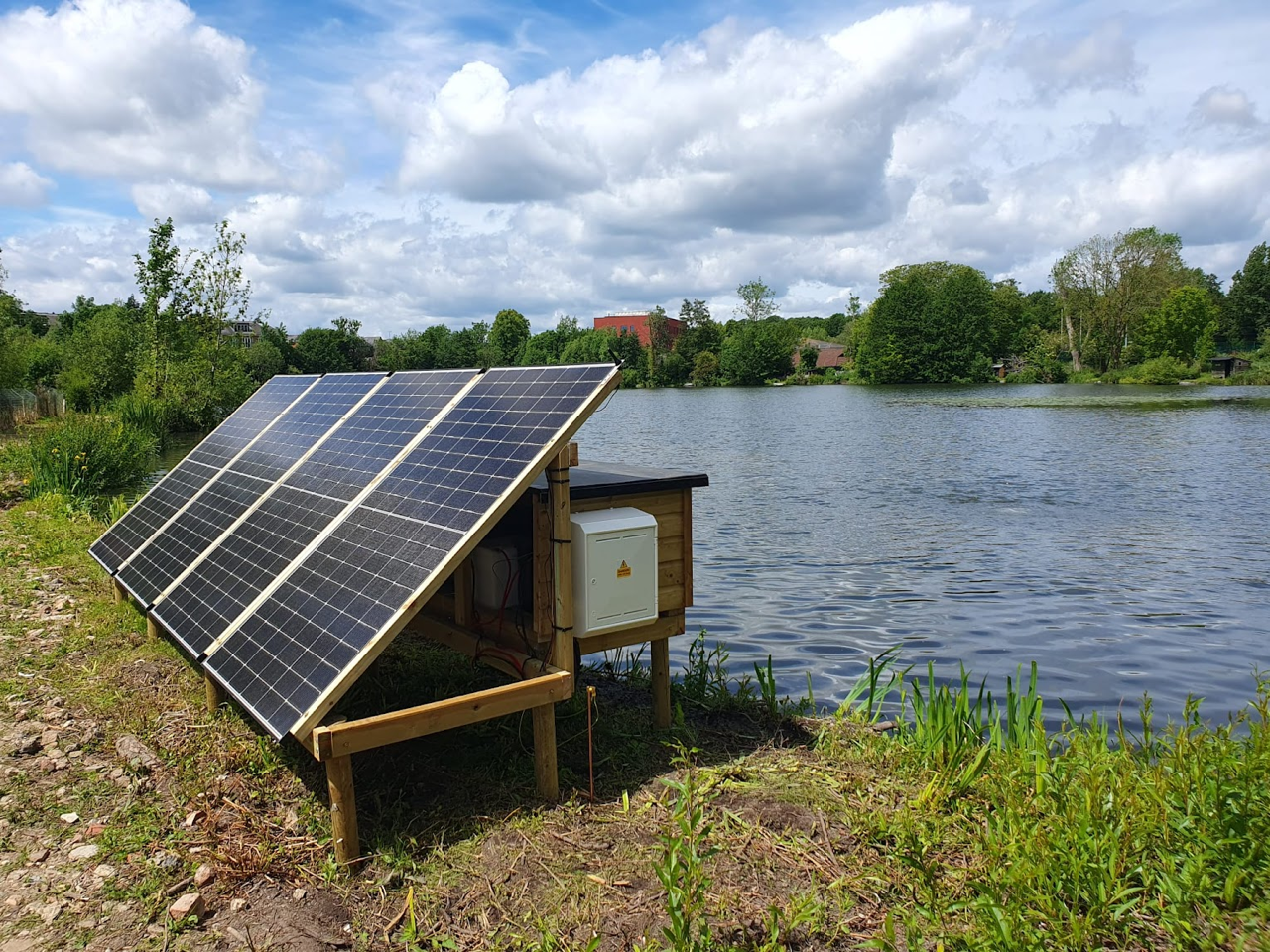
We also integrated Victron VRM data for solar-powered installations, as many of the locations are remote and off-grid. Our tech stack comprised hardware, software, and firmware: beginning with an ESP32 microcontroller with MicroPython for device logic. Connectivity came in the form of a 4G cellular modem (with fallback to 2G/GPRS for resilience). We used modern Ethernet-abstracted modems with built-in APIs for signal strength/metadata, two devices supported Teltonika TRB246 and RUT906.
IoT Security was ensured by AWS IoT certificates for device authentication and encrypted comms, while firmware updates were handled securely via S3 with restricted upload tokens. Application security owed to Filament 4 dashboards with native 2FA and role/permission panels built-in. We avoided black-box third-party plugins, instead choosing an open-source base platform vetted by community.
The application layer was based on the latest Laravel and Filament php stack for APIs, taking advantage of Filament’s built-in panels for role-based dashboards and 2FA. Time-series data was stored in AWS exposed via dashboard and future app. The AI layer transforms vast amounts of raw environmental data into actionable predictions, risk alerts, optimisations, and planning insights. Cursor and GPT-5 / Sonnet 3.5 were used to accelerate coding of complex features like natural-language device status logic to deliver “Aeration Intelligence”.

.svg)


.svg)
